Faster first response
Approved questions can be handled immediately while human teams focus on exceptions and complex cases.
MDS designs governed AI reception across website chat, WhatsApp-compatible journeys, voice and CRM handoff so common questions are answered quickly while sensitive or clinical situations escalate to humans.
Many healthcare leads are lost after the campaign succeeds: slow response, unanswered repetitive questions, missed calls, unclear service routing and inconsistent follow-up. AI can help with these operational gaps when its role is narrow and governed.
We design reception agents as an assistance layer. They can handle approved FAQs, collect structured information, route by intent and support booking workflows, while clinical questions, emergencies, complaints and ambiguous cases are transferred to people.
Approved questions can be handled immediately while human teams focus on exceptions and complex cases.
Collect service, branch, preferred time and other agreed fields before routing.
Explicit human handoff rules for clinical, urgent, complaint, privacy or uncertain scenarios.
Conversation categories and handoff outcomes can reveal recurring friction in the patient journey.
We start with the operating problem, not the channel or tool.
The exact scope is adapted to the growth stage, market, existing stack and operational capacity.
Approved intents, common questions, required fields, escalation categories and routing logic.
Structured service, location, preparation, policy and operational answers supplied and approved by the client.
Website or supported messaging flows with clear disclosures and human fallback.
Call answering, intent capture, routing or booking support where telephony integration allows.
Rules for service, location, language, urgency and other non-clinical routing criteria.
Trigger conditions, queue destinations, context handoff and fallback behavior.
Create or update records, appointments or tasks when compatible systems and APIs are available.
Intent volume, unanswered questions, handoff rate and operational friction reporting.
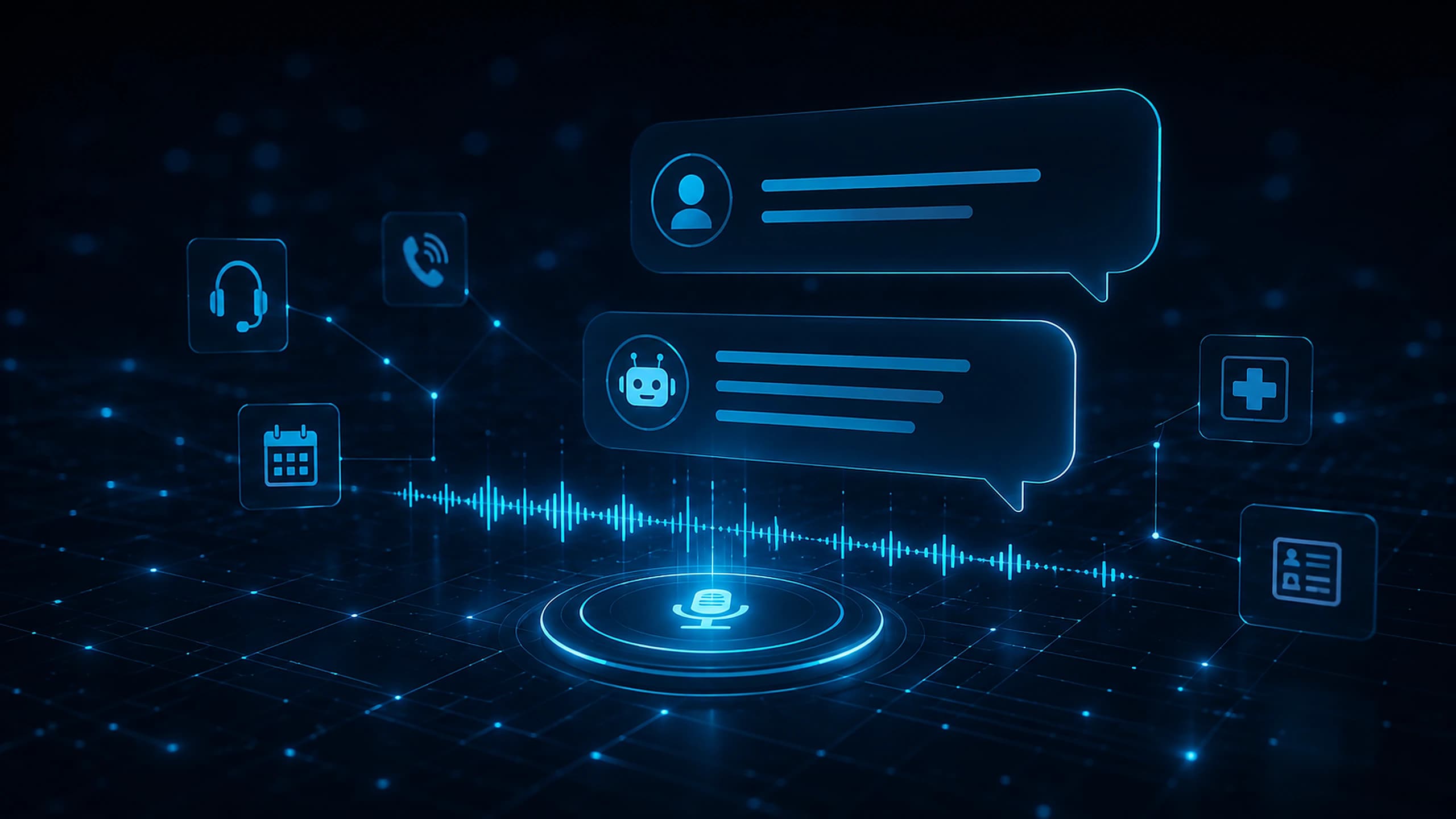
Answer approved FAQs, capture intent and move users to the right service or human team.
Design WhatsApp-compatible or other supported messaging journeys around inquiry and follow-up.
Handle common call intents, routing and non-clinical information with escalation safeguards.
Collect preferences or interact with scheduling systems when integration rules allow.
Support approved English and Arabic knowledge with localization and separate quality review.
Use conversation data to identify missing information, demand patterns and reception bottlenecks.
Separate administrative/support tasks from clinical judgment, diagnosis and emergency handling.
Document questions, approved answers, required fields, routing and escalation triggers.
Integrate website, messaging, telephony, CRM or booking layers where technically appropriate.
Run happy paths, edge cases, ambiguous wording, escalation and failure-state scenarios.
Start with controlled scope, review transcripts and tune knowledge/routing rules.
Expand only after performance and escalation behavior are stable and understood.


Healthcare growth needs commercial visibility without losing privacy, accuracy or responsible review.
No. The system is designed for administrative information, approved FAQs, qualification and routing. Clinical judgment should remain with appropriately qualified professionals.
We can design WhatsApp-compatible journeys where the client's approved provider, API access and platform rules support the required workflow.
Yes, with an appropriate voice/telephony setup. The exact capabilities depend on the phone system, region and integration requirements.
The preferred behavior is to acknowledge the limitation, avoid inventing information and route the conversation to a human or approved fallback.
Potentially, when the booking system provides a suitable integration. Otherwise it can collect preferences and create a task for the reception team.
We design data collection around minimum necessary information, clear purpose and the client's approved systems, policies and retention requirements.
Start with a safe intent, knowledge and escalation map before adding AI to patient-facing conversations.