
Quick answer
A healthcare advertising agency in Egypt should be judged on intent targeting, claims-safe creative, landing-page relevance, patient-response handoff and booking-quality measurement. This page owns the paid-advertising partner decision; the broader agency-selection intent remains on the main Egypt medical marketing guide.
Request a Paid Media ReviewKey takeaways
- Paid advertising should target a defined service and intent—not every service at once.
- The ad, landing page and reception script should describe the same service and next step.
- Healthcare creative needs accurate, defensible claims and consent-aware use of patient material.
- Platform lead volume is not enough; qualified inquiry and booking quality matter.
- The client should retain ownership of ad accounts, pixels, analytics and conversion data.
Healthcare paid-media decision chain
A decision framework that keeps this search intent separate from broader marketing topics.
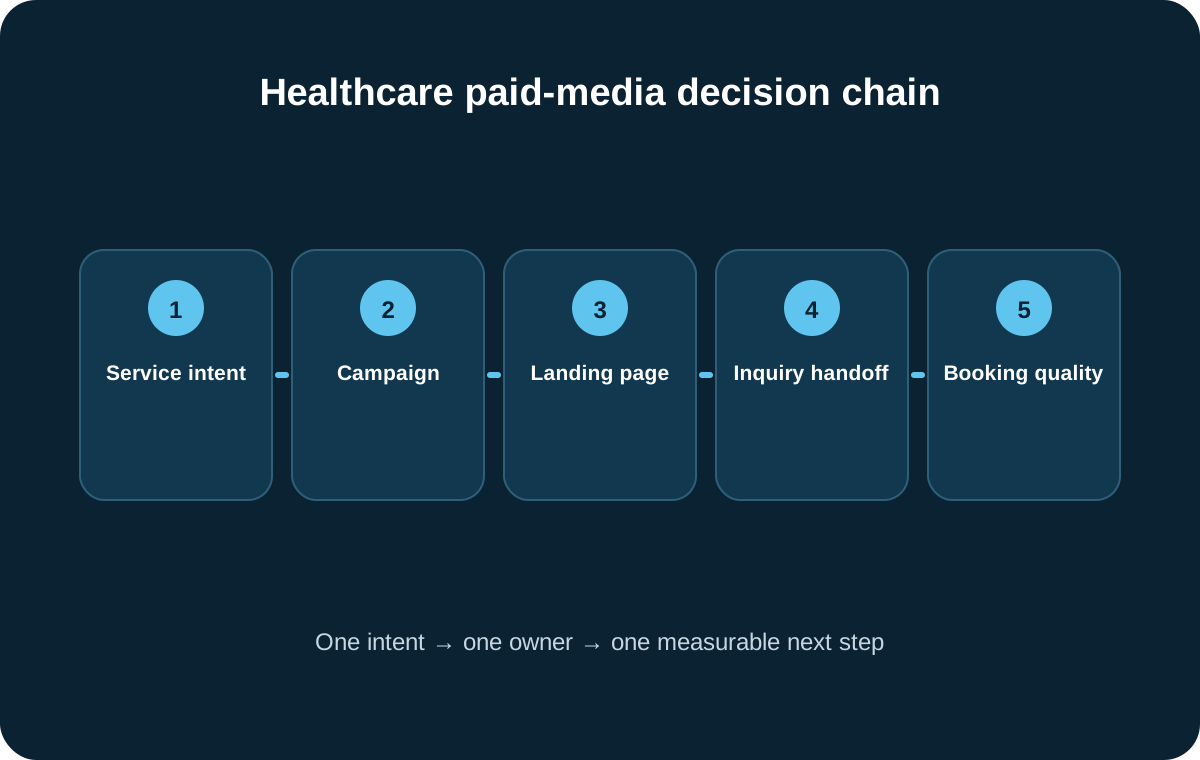
Advertising agency intent is narrower than full-service agency intent
A healthcare advertising agency in Egypt may manage Google Ads, Meta campaigns, creative testing, landing pages and conversion tracking. That is different from asking one partner to own the entire brand, SEO, content, CRM and growth strategy.
This narrower page helps a clinic or hospital evaluate paid-media capability without duplicating the main agency-selection guide.
Cannibalization control
This page owns paid advertising partner intent. The parent page owns broad medical marketing agency selection.
Start with service and patient intent
The account structure should reflect how patients search and decide. High-intent services behave differently from elective procedures, diagnostics or long-consideration treatments. The agency should show how campaign groups map to service pages and how irrelevant demand will be excluded where appropriate.
A campaign built around a vague “more patients” objective makes measurement difficult. Define the service, geography, desired action and operational capacity first.
- Priority service or procedure
- Target geography and branch
- Search or audience intent
- Landing page owner
- Inquiry channel and response owner
The landing page is part of the media system
Ad performance can be damaged by a page that loads slowly, answers the wrong question or sends every service to the same generic contact page. The advertising partner should identify page-level conversion friction even if another team owns development.
Useful healthcare landing pages explain the service, the first step, where it is available and how to contact the team without guaranteeing outcomes.
Paid media handoff checklist
| Layer | What must match | What to avoid |
|---|---|---|
| Ad | Service, location and next step | Generic claims across unrelated services |
| Landing page | Same intent and clear evaluation path | Homepage-only traffic |
| Inquiry | Service/source context preserved | Blank WhatsApp conversations |
| Reception | Relevant operational qualification and scheduling | Starting every inquiry from zero |
| Reporting | Qualified inquiry and booking when available | Platform leads as the only outcome |
Test messages, not cosmetic variations
A useful creative test changes the decision angle: convenience, doctor authority, service explanation, first-consultation clarity or a common objection. Changing only colors or crop positions rarely teaches the team much about patient intent.
Keep claims factual and review patient images, testimonials and treatment language before launch. Healthcare advertising should create clarity rather than pressure.
- One service per test where possible
- One clear call to action
- No guaranteed results
- No fabricated scarcity
- Document the hypothesis before changing multiple variables
Tracking should survive the move from ad to call or WhatsApp
Many healthcare journeys leave the browser quickly. If campaign context disappears when the patient calls or opens WhatsApp, the report loses a major part of the journey.
Use UTM conventions, source-aware links, call tracking where appropriate and CRM fields that preserve source without placing sensitive health information in URLs or ad tools.
- 1
Name campaigns consistently
Use a documented service-location-channel convention.
- 2
Preserve source
Carry source context into forms, calls or WhatsApp where feasible.
- 3
Define qualified inquiry
Agree on what operationally counts before reporting performance.
- 4
Reconcile bookings
Match inquiry data to appointments when systems can do so reliably.
Healthcare advertising agency scorecard
Before awarding the account, ask the agency to explain the whole paid-media chain. A strong answer includes traffic quality, page relevance, measurement and patient-access constraints—not only bidding tactics.
Agency evaluation criteria
| Criterion | Strong answer | Weak answer |
|---|---|---|
| Healthcare experience | Explains claim review and patient journey | Only shows ad screenshots |
| Account structure | Maps services and locations to clear campaign owners | One campaign for everything |
| Creative testing | Uses documented hypotheses | Changes design randomly |
| Conversion | Reviews landing page and response handoff | Stops at lead generation |
| Ownership | Client retains account and data access | Agency-owned critical accounts |
Budget should follow capacity and evidence
There is no responsible universal ad budget for every clinic or hospital in Egypt. The useful question is how much demand the service can handle, what a qualified inquiry means and which conversion stages are measurable.
Start with a scope that can generate enough learning without overwhelming reception, then reallocate based on quality rather than vanity metrics.
- Set service-level capacity before scaling
- Separate media spend from management and production scope
- Do not assume cheaper leads are better leads
- Review branch and service-line quality separately
Questions to ask a paid-media partner
Use these questions to expose whether the agency understands healthcare operations or only ad-platform mechanics.
- Which services would you separate into their own campaigns and landing pages?
- How will you review medical claims and patient-use permissions?
- How will call and WhatsApp inquiries be attributed?
- Who owns the ad accounts, pixels and analytics?
- What metric would make you reduce spend even if platform CPL looks good?
Frequently asked questions
What is the difference between a healthcare advertising agency and a healthcare marketing agency?
A healthcare advertising agency focuses mainly on paid demand such as Google Ads, Meta campaigns, creative testing and landing-page conversion. A full healthcare marketing agency may also own brand strategy, SEO, content, reputation, CRM and broader patient-growth systems. Choose based on the scope you actually need.
Which paid channel is best for clinics in Egypt?
There is no single best channel for every service. Google Search can be strong when patients already express treatment intent, while social platforms can create or shape demand for more discovery-led services. The correct mix depends on specialty, geography, creative, landing pages and the clinic’s ability to respond.
Should a medical advertising agency guarantee patient numbers?
No. Patient volume depends on market demand, service suitability, budget, creative, competition, landing-page quality, response operations and many factors outside an agency’s direct control. A credible partner should define measurable leading and conversion indicators without guaranteeing clinical or commercial outcomes.
How should clinics track WhatsApp leads from ads?
Use source-aware WhatsApp links or prefilled messages, consistent UTM naming, CRM or inquiry-source fields and clear reception workflows. Avoid placing sensitive medical data in advertising URLs. The objective is to preserve campaign and service context so bookings can be reconciled when systems allow.
Who should own the ad account?
The healthcare organization should retain administrative access to its advertising accounts, analytics and conversion data. Agencies can manage the accounts, but ownership and access should be defined so the clinic or hospital is not locked out of its historical data or audiences.
Source and claim policy
This guide avoids invented performance benchmarks, fake agency rankings, guaranteed patient volumes and unsupported pricing claims. Recommendations should be validated against the organization’s specialty, market, data, patient-access workflow and current platform or regulatory requirements.
Related MDS guides
Review paid media from the ad to the booked appointment
Share your priority services and current paid-media setup. MDS can identify where intent, landing pages, inquiry handoff or measurement are limiting useful demand.
 MDS TeamHealthcare marketing, search, patient-journey and conversion editorial team at MDS Healthcare. This page is educational and does not replace legal, regulatory, medical or privacy advice.