
Quick answer
A healthcare KOL strategy should start with the audience and educational objective, then select experts for specialty relevance, define a legitimate role, document compensation and disclosures, approve claims, build useful content and measure professional or commercial progression. Follower count alone is not a KOL strategy.
Review My KOL ProgramKey takeaways
- A KOL is selected for professional relevance, not follower count alone.
- Define the expert’s legitimate role before negotiating content volume.
- Compensation and material relationships need appropriate disclosure.
- Claims and clinical statements require evidence and review.
- KOL performance should be measured against the intended audience and next step.
- Patient testimonials and doctor endorsements should never be fabricated or stripped of important context.
Experience & proof
Approved evidence you can inspect
These are anonymized, approved MDS Results & Proof summaries. They show operating context and outcome signals, not guarantees.
Multi-location specialty clinic
90-day operating window · GCC · demand-to-booking leakage
A specialty clinic group needed a clearer connection between demand generation, response discipline and booking visibility across multiple locations.
- Response ownership improved
- Campaign and inquiry sources were connected closer to booking outcomes
- Missed calls and follow-up gaps became reviewable signals
Hospital service-line growth
120-day build and optimization window · MENA
A healthcare network needed one operating view across service-line positioning, landing experiences, visibility and measurable inquiry movement.
- Priority service-line clarity strengthened
- Attribution structure was defined across campaign and organic signals
- Decision cadence became more focused on decision-ready KPIs
Client feedback
What clients said about the operating system
Anonymized feedback already published in the MDS Results & Proof experience. No star-rating or self-serving review schema is added.
“The difference was a system — not more posts.”
“We reduced response waste and started tracking bookings properly.”
“The market-entry plan gave us a clear path for cross-border demand.”
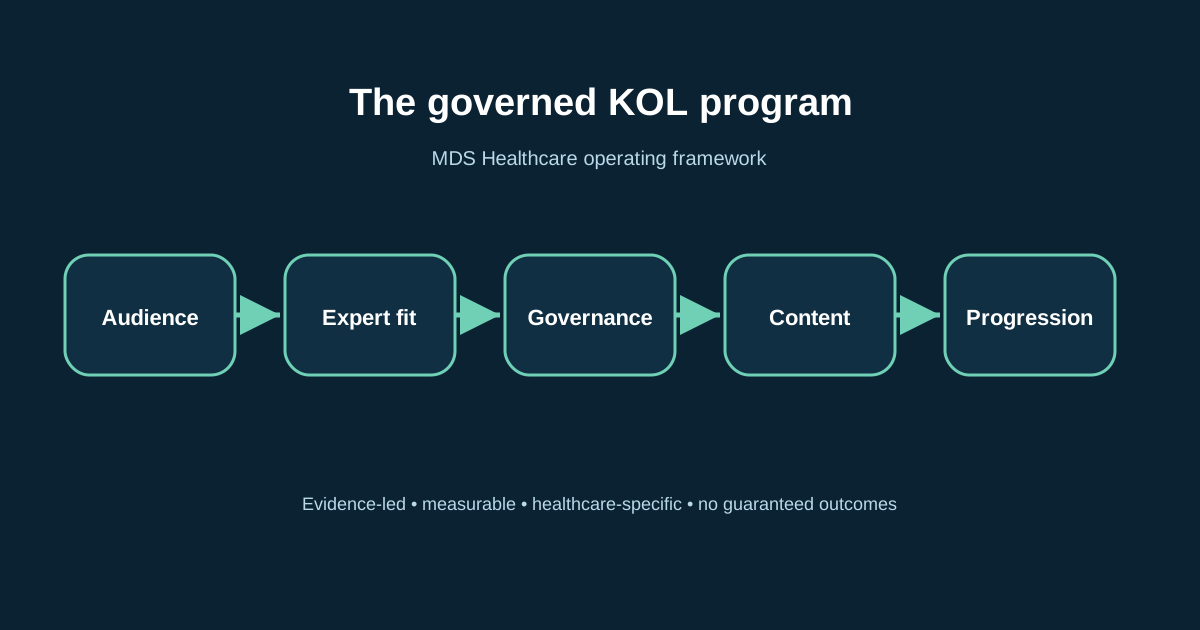
The governed KOL program
Expert influence works when role fit, evidence, disclosure, content and measurement are designed as one system.
What healthcare KOL marketing is — and what it is not
KOL marketing uses recognized experts to support education, professional understanding or trust around a relevant healthcare topic. In some programs the audience is clinicians or procurement teams; in others it may include patients evaluating an expert-led service. The role should be defined by the decision the audience is making.
A large social following can be useful, but visibility is not the same as opinion leadership. Specialty relevance, professional standing, communication quality, geographic fit, conflict profile and evidence discipline matter more when healthcare claims and trust are involved.
The program also needs a destination. Expert content should connect to an approved resource, service page, event, consultation path, sales conversation or other defined next step rather than ending as isolated social engagement.
Audience
Who needs to understand or trust something differently?
Expert role
Educator, advisor, speaker, contributor, investigator, spokesperson or creator.
Governance
Contracts, compensation, disclosure, claims, approval and conflict management.
Progression
What should a qualified audience member do after engaging with the expert?
How to choose a healthcare KOL
Start with role fit. A surgeon respected for technical education may be ideal for an HCP webinar but not for a mass consumer campaign. A creator with strong patient-facing communication may be useful for awareness but not a substitute for clinical authority. The right person depends on audience, objective and format.
Build a shortlist using transparent criteria and record why each person was considered. This creates a defensible process and reduces the temptation to select only by follower count or personal preference.
A practical KOL selection scorecard.
| Dimension | What to review | Red flag |
|---|---|---|
| Specialty relevance | Practice area, research, teaching and audience fit | Fame with weak topic relevance |
| Credibility | Professional standing and quality of public communication | Unsupported claims or repeated controversy |
| Audience quality | Who actually listens and why | Large reach with little relevant engagement |
| Governance fit | Conflicts, disclosure, contracting and approval readiness | Resistance to transparency or review |
| Communication | Ability to explain evidence accurately and clearly | Overstatement, sensational claims or script dependence |
Build a KOL content system, not one sponsored post
A credible program normally uses a sequence of formats matched to audience needs: expert interviews, educational video, event participation, case discussion, Q&A, professional commentary, long-form resources and short-form distribution. Each asset should have a clear purpose and approval path.
Repurpose carefully. A nuanced expert discussion should not be reduced to a short claim that changes its meaning. Keep the evidence, limitations and disclosure visible enough for the format being used.
- Create an approved topic and claim library before production.
- Use briefing documents that separate mandatory facts from the expert’s own perspective.
- Document disclosure language for every paid or material relationship.
- Define who approves scientific, medical, legal and brand elements.
- Create destination pages that continue the education rather than hard-selling too early.
- Track which formats create qualified professional or patient progression.
Use KOL content to strengthen E-E-A-T without manufacturing authority
Expert participation can strengthen a content ecosystem when the expert’s identity, qualifications and contribution are transparent. It does not create authority simply because a famous doctor appears in a video. The surrounding page still needs accurate information, clear authorship, appropriate sourcing and an honest relationship between the expert and the organization.
For agency or brand proof, showcase approved case studies and real client feedback separately from KOL endorsements. Do not mix an agency testimonial with a clinical endorsement, and do not attach rating schema to self-controlled organization testimonials in an attempt to obtain stars.
Trust principle
The goal is to make the relationship understandable: who is speaking, why they are relevant, what connection they have to the organization and what evidence supports the message.
How to measure a healthcare KOL program
Measurement should follow the role. An HCP education program may use qualified registrations, watch depth, resource engagement and downstream account activity. A patient-facing expert campaign may use branded search, high-intent page visits, qualified inquiries and booked consultations where attribution is possible.
Avoid claiming that every booking after a KOL campaign was caused by the KOL. Use tagged links, landing-page events, CRM source fields and time-window comparisons, then state what is directly attributable and what is only influenced.
Authority signals
Relevant reach, watch depth, saves, citations and repeat expert engagement.
Qualified progression
Event registration, resource use, consultation intent or B2B opportunity movement.
Commercial evidence
Tracked inquiries, opportunities or bookings where the measurement stack supports attribution.
Learning
Which expert-topic-format combinations should be repeated, changed or stopped.
KOL program red flags
- Selecting by follower count before defining the audience.
- Undisclosed compensation or material connection.
- Asking experts to repeat unsupported product or treatment claims.
- Using a doctor’s title to imply evidence that has not been established.
- Publishing patient stories without appropriate consent and privacy controls.
- Measuring only impressions and engagement.
- No destination page, CRM source or next-step measurement.
Frequently asked questions
What does KOL mean in healthcare?
KOL means key opinion leader: an expert recognized for relevant knowledge and influence within a professional or patient-facing community. The value comes from role and audience fit, not popularity alone.
How is KOL marketing different from influencer marketing?
KOL programs emphasize relevant expertise and professional credibility, while influencer programs may prioritize content reach and audience affinity. Some individuals can play both roles, but healthcare teams should define the role, evidence and governance requirements explicitly.
How should healthcare brands disclose paid KOL relationships?
Disclosure requirements vary by jurisdiction and platform. As a general governance principle, material relationships should be clear and understandable near the endorsement or expert content. Obtain market-specific legal and regulatory guidance for the program.
What should a KOL campaign measure?
Measure against the intended role: professional engagement, qualified event or resource progression, branded demand, high-intent site behavior, B2B opportunity movement, or patient inquiries where appropriate and measurable. Avoid treating reach alone as proof of commercial impact.
Can KOL content improve healthcare SEO?
It can strengthen useful expert content and earn attention or links, but there is no guaranteed ranking benefit. Search performance still depends on relevance, helpfulness, technical accessibility, site authority and how well the page satisfies the query.
Source and claim policy
This article provides marketing and governance guidance, not legal or medical advice. KOL contracting, compensation, disclosure, healthcare claims and professional advertising rules vary by market and activity; obtain local legal, regulatory and professional guidance before launch.
Related MDS guides
Healthcare PR vs KOL Marketing
Understand when the organization needs earned reputation, expert influence or both.
Healthcare PR Agency Guide
Evaluate a PR partner without confusing publicity with growth strategy.
Influencer & KOL Marketing Service
Review the MDS service model for governed expert and creator programs.
Doctor Authority Marketing
Build a durable authority system around a doctor or founder.
Design the expert role before choosing the expert
MDS can review the objective, audience, expert shortlist, disclosure model, content workflow, landing journey and measurement plan before you spend on a KOL activation.
 MDS TeamHealthcare marketing, search, patient-journey and conversion editorial team at MDS Healthcare. This page is educational and does not replace legal, regulatory, medical or privacy advice.