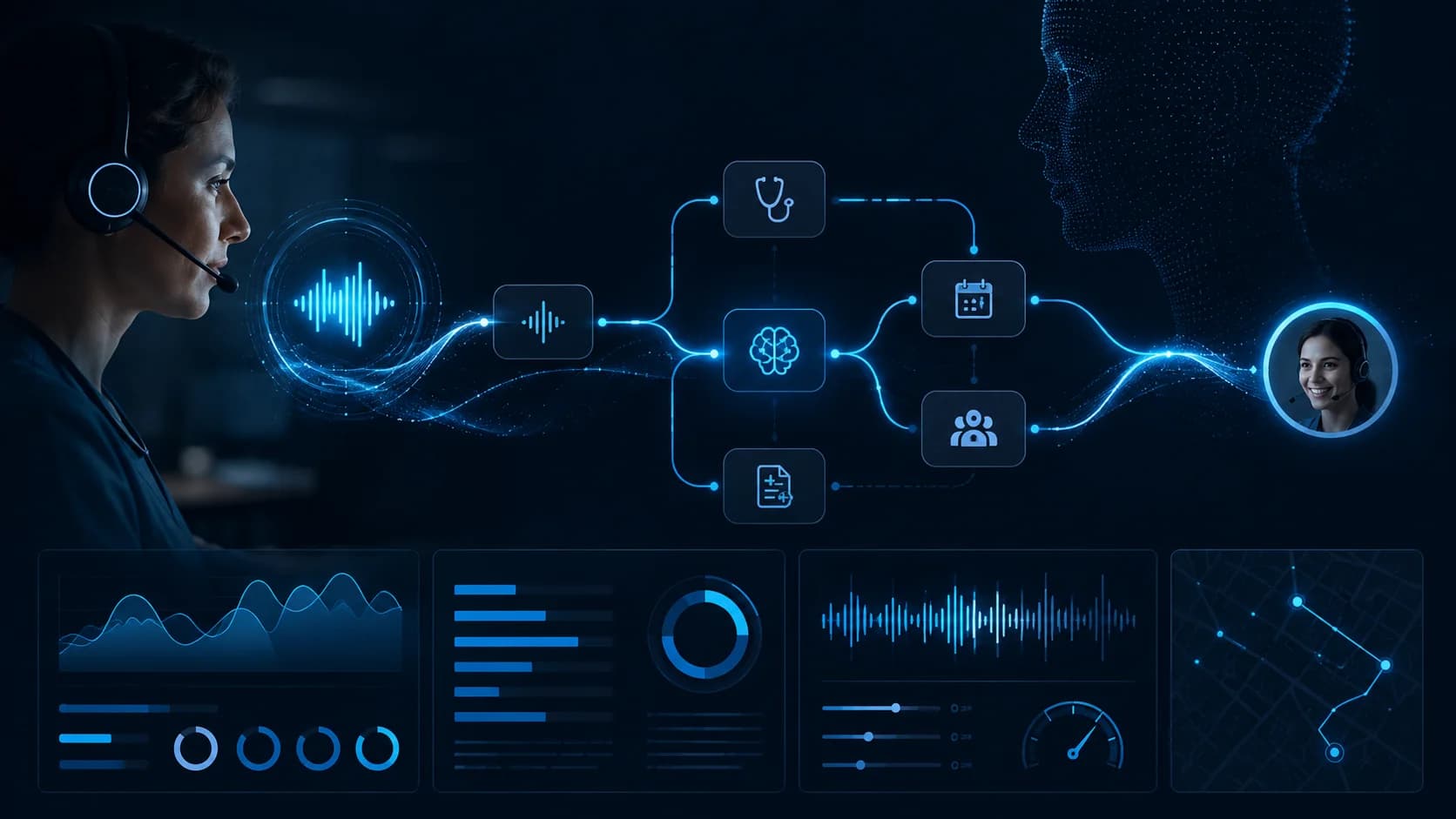
Design call flows that answer faster, route better and know exactly when to hand off.
MDS voice-agent demos show how governed AI can support appointment intent, pricing and insurance questions, multi-location routing, after-hours calls and human escalation without providing medical advice.
What this module is designed to do.
The interface is only the visible layer. The real value is the operating logic, boundaries, routing and ownership behind it.
Operational call handling
Answer common non-clinical questions and guide callers to the right next step.
Booking intent capture
Identify location, timing and scheduling preferences without collecting unnecessary clinical data.
Multi-location routing
Direct callers based on branch, department or service ownership rules.
After-hours support
Provide closure information, emergency disclaimers and approved callback or booking options.
Bilingual flows
Configure English and Arabic call journeys with consistent disclosures and escalation rules.
Structured handoff
Transfer to humans with a concise non-sensitive summary where the integration supports it.
A visible path from signal to owner.
The workflow is deliberately explicit so teams know what the AI does, what it does not do and where humans take over.
Disclosure
State that the caller is interacting with an automated assistant and define the non-clinical scope.
Intent capture
Identify booking, pricing, location, billing, rescheduling or human-contact needs.
Safe qualifiers
Capture only operational details needed for routing or scheduling.
Route
Move to a booking path, callback queue, WhatsApp handoff or live transfer.
Summarize and log
Create an approved non-sensitive handoff note and measurable call state.
QA and improve
Review call outcomes, escalation quality and script performance before expanding coverage.
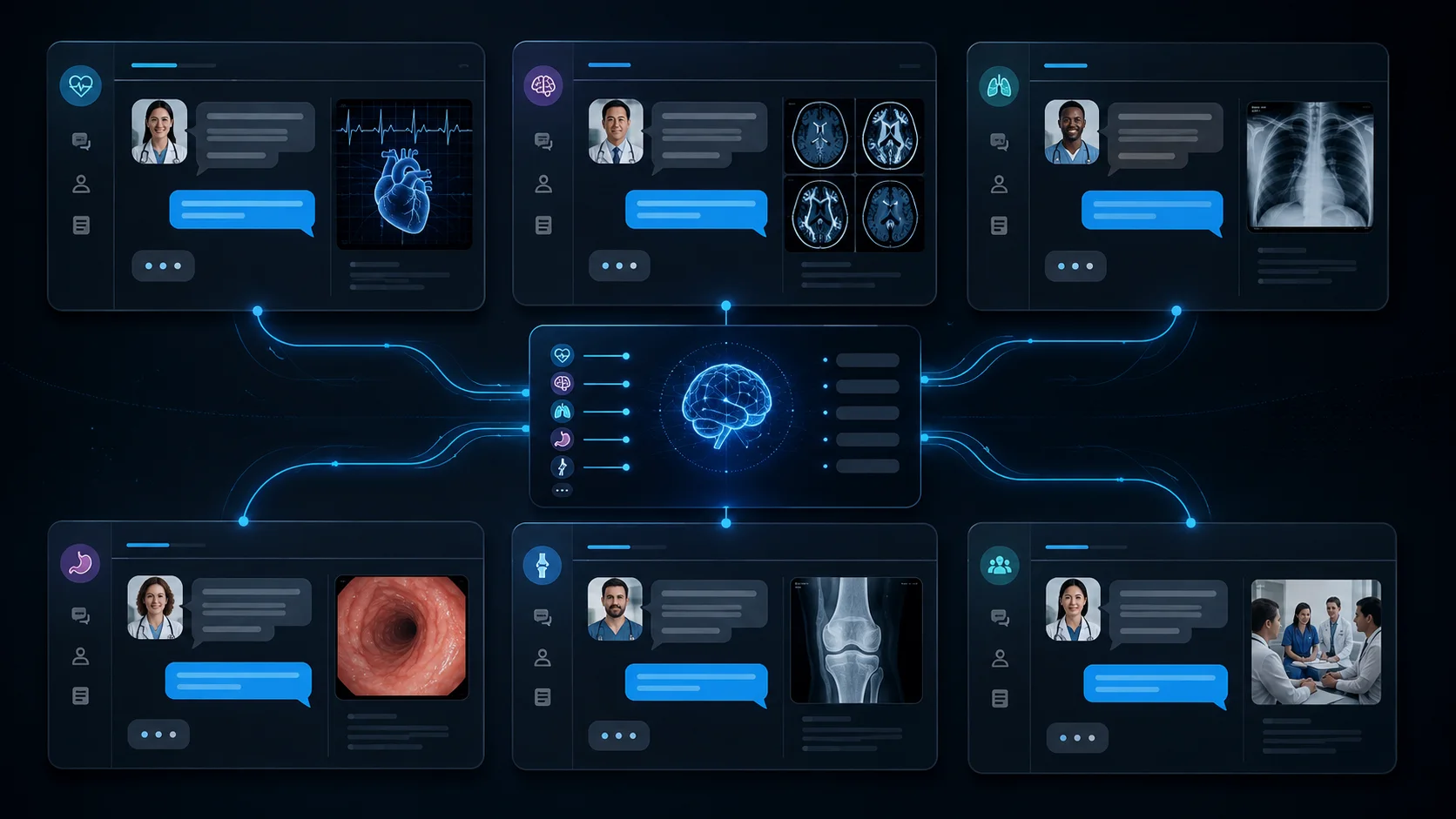
The interface is only one moment in a much larger journey.
Voice Agent is designed to sit inside the real operating flow — before and after the interaction — with routing, ownership, approved boundaries and measurable states connected around it.
See the operating logic, not just a pretty interface.
Switch between representative scenarios to see how the module should interpret the request and move toward an approved next step.
The voice flow captures preferred location, timeframe and new/returning status, then offers booking or transfer options.
Useful AI knows where its authority ends.
The boundaries are part of the product architecture, not a disclaimer added after the workflow is built.
Designed to do
Never positioned to do
Connect the module to the systems and metrics that make it useful.
Pilot the workflow before you scale the automation.
The deployment sequence is intentionally practical: define, connect, test, measure, then expand.
Designed to feel simple even when the workflow behind it is not.
The user sees one clean interaction. Behind it sit routing rules, boundaries, ownership, integration points and measurable states.
Questions about Voice Agent.
No. The intended use cases are operational. Clinical questions are routed to humans or approved care channels.
Related AI modules.
Deploy Voice Agent around a real workflow, not a technology demo.
Define the use case, boundaries, owner, integration path and success signals before wider rollout.