Quick answer
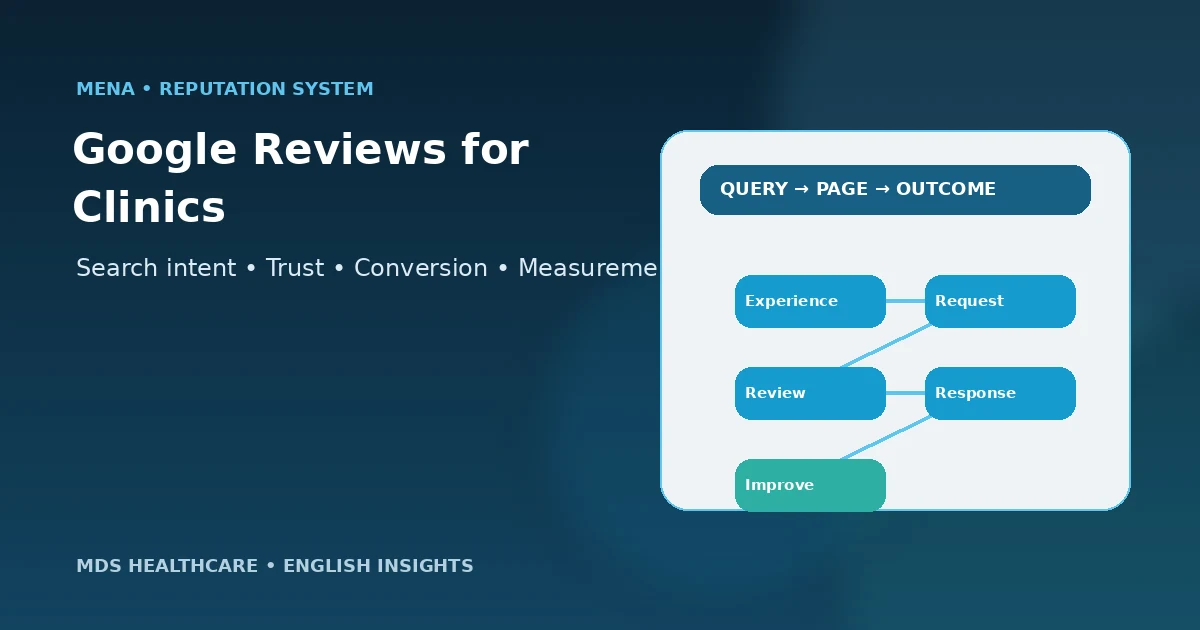
Clinics can get more Google reviews by asking real patients for honest feedback, giving them a direct Google review link or QR code, choosing appropriate moments in the patient journey, training staff and following a consistent request workflow. Google prohibits incentives for reviews and other fake-engagement practices. Do not review-gate by asking only happy patients. Respond professionally and protect privacy when handling negative feedback.
Request a Clinic Reputation ReviewKey takeaways
- Ask for honest reviews from real patients without incentives.
- Use a direct Google review link or QR code to reduce friction.
- Do not review-gate by selectively requesting reviews only from people predicted to be happy.
- WhatsApp can be a useful request channel when communication is appropriate and consent expectations are respected.
- Negative-review responses should protect privacy and avoid confirming clinical details publicly.
- Treat review themes as operational feedback, not only as a marketing metric.
The clinic review operating system
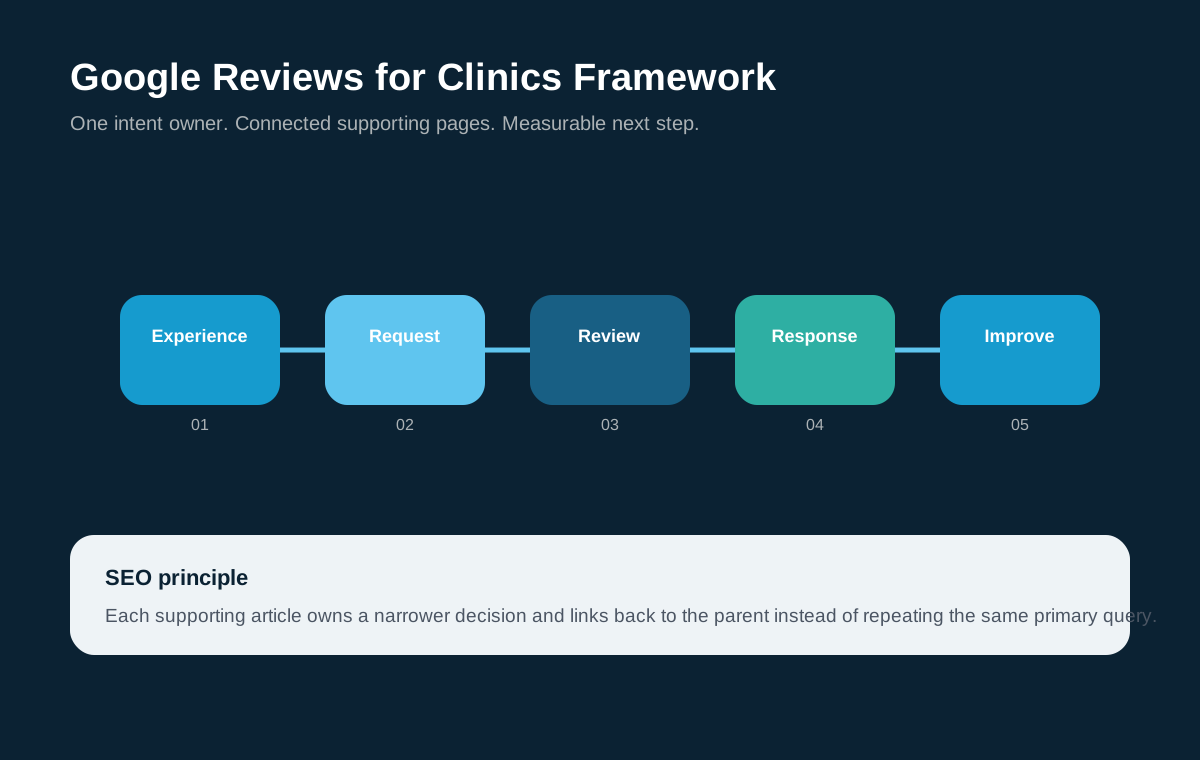
Reviews grow sustainably when experience, request, response and operational learning are connected.
Why Google reviews matter in the clinic decision journey
Patients often compare clinics using search results, maps, doctor information, websites and public feedback before they contact reception. Reviews can help potential patients understand the experience other people chose to share and can make a Business Profile more informative.
Reviews are not a substitute for clinical quality, nor should they be manipulated into a perfect score. A sustainable reputation strategy makes it easy for real patients to leave honest feedback and gives the clinic a repeatable way to respond and learn.
Start with Google review policy, not a growth hack
Google states that reviews and other Maps contributions should reflect genuine experiences and prohibits incentives such as free or discounted goods or services in exchange for posting, changing or removing reviews. That means the clinic should not buy reviews, reward five-star reviews or condition benefits on public feedback.
The request should be neutral: invite honest feedback and provide a direct route to the review form. The clinic should also avoid workflows that screen patients privately and only send the Google link to people who report a positive experience.
Policy-safe principle
Ask for an honest review, not a positive review. Make the process easy, but do not manipulate who is allowed to reach the public review step.
Create a repeatable clinic review request system
Choose one or two appropriate moments when the clinic can invite feedback without interrupting care. The moment will vary by specialty and service. A routine consultation may have a different follow-up rhythm from a procedure or longer treatment plan.
Create a simple owner, message, channel and tracking method. The clinic should know who sends the request, which direct Google link is used, how often the workflow is reviewed and how staff handle questions. The dedicated “how to get more Google reviews” guide goes deeper into execution.
Use WhatsApp carefully as a review-request channel
In MENA markets, WhatsApp is often part of appointment communication. When it is appropriate to use the existing patient communication channel, a short review request can reduce friction because the direct Google link is already in the conversation.
Keep the message focused on feedback, not a reward. Avoid including unnecessary medical information in the message. For a complete message structure and workflow, use the WhatsApp review-request cluster guide.
Respond to reviews for future readers, not just the reviewer
Public replies are visible to other people researching the clinic. Keep responses professional, concise and relevant. Positive feedback may need a simple thank-you. Negative feedback needs extra care because the clinic should not disclose private medical information or confirm details publicly.
Create an escalation rule for safety concerns, legal complaints, alleged clinical harm, staff misconduct or extortion. The negative-review response guide provides a practical framework without using copy-paste replies that sound robotic.
Measure the review process without chasing vanity targets
Useful process measures include how consistently eligible patients are invited, whether the direct link works, response coverage, common themes in feedback and whether operational issues repeat. Avoid setting an artificial target such as “reach exactly 100 reviews” if it causes staff to pressure patients or manipulate the process.
Use reviews as one trust signal alongside clear service information, doctor profiles, location accuracy, website usability and patient access.
Three focused guides support this review strategy
This parent page owns the broad Google reviews strategy for clinics. The supporting cluster pages own review acquisition, negative-review responses and WhatsApp review requests separately so each can answer a focused query without cannibalizing the parent.
Make the Google Business Profile trustworthy before asking for more reviews
A review-request campaign cannot compensate for an inaccurate or confusing Business Profile. Confirm the clinic name, primary category, location, contact routes, website link, hours and branch separation before driving more patients to the profile. Multi-location groups should make it easy for patients to review the location they actually interacted with.
Keep the website and Business Profile consistent enough that a patient can move between them without questioning whether they found the right clinic. Reviews then become part of a broader trust system rather than an isolated star-rating project.
If the clinic changes location, phone number, brand name or operating hours, update the profile and the relevant website pages as part of the same operational change. Reputation work is strongest when the underlying entity information is maintained accurately.
Create ownership, escalation and quality control
Decide who owns the review workflow. One team member or role should maintain the direct review links, check new feedback, route serious complaints, and make sure public replies follow the clinic’s approved tone and privacy standards. Larger groups may need branch-level owners plus a central reputation lead.
Create escalation categories before they are needed. A routine compliment, waiting-time complaint, billing concern, alleged clinical harm, staff allegation, spam review and extortion attempt should not all follow the same path. A documented process reduces emotional replies and gives the clinic a safer way to involve leadership when necessary.
Review themes can also become operational input. If several reviews mention the same scheduling or communication problem, the reputation team should share that pattern with the people who can fix the process. Better review management should improve the patient experience, not merely the wording of public responses.
Review tactics that create unnecessary risk
The safest long-term strategy is deliberately boring: genuine experiences, a low-friction request, consistent ownership, privacy-aware replies and operational follow-through. That system may not produce an artificial spike, but it is easier to defend, maintain and improve.
- Buying reviews or using fabricated profiles
- Offering discounts, gifts or other incentives for public reviews
- Asking specifically for five-star feedback
- Review gating that sends only predicted positive patients to Google
- Publishing patient or clinical detail in public responses
- Copy-pasting the same defensive reply under every complaint
- Using a single review link for the wrong branch or location
- Treating a star target as more important than the underlying patient experience
Frequently asked questions
How can I get more Google reviews for my clinic?
Ask real patients for honest feedback, provide a direct Google review link or QR code, choose appropriate moments in the patient journey and train the team to use a consistent request workflow. Do not offer incentives or selectively request public reviews only from patients expected to leave positive feedback.
Can clinics offer discounts for Google reviews?
Google states that offering free or discounted goods or services in exchange for customers posting, changing or removing reviews is prohibited fake engagement. Keep the request neutral and make it clear that honest feedback is welcome regardless of whether it is positive or negative.
Should a clinic reply to negative Google reviews?
A professional response can show future readers that the clinic takes feedback seriously, but privacy comes first. Avoid confirming that the reviewer was a patient or discussing clinical details publicly. Use a calm acknowledgement and invite private contact when appropriate, with escalation for serious complaints.
Can a clinic ask for Google reviews on WhatsApp?
A clinic can use an appropriate patient communication channel to share a direct review link, provided the request is genuine, non-incentivized and consistent with the clinic’s communication and privacy practices. Keep the message short and avoid unnecessary clinical details.
Do more Google reviews guarantee higher local rankings?
No. Reviews are one part of a broader local presence, and Google does not provide a guaranteed review count or rating that produces a specific ranking. Focus on genuine feedback, complete Business Profile information, relevant website content and a strong patient experience rather than chasing a numerical threshold.
Source and claim policy
This guide follows Google’s published Business Profile guidance: reviews should reflect genuine experiences, and incentives in exchange for posting, changing or removing reviews are prohibited. It does not claim that a specific review count, star rating or response speed guarantees rankings or bookings.
Related MDS guides
How to Get More Google Reviews for Your Clinic
Build the request workflow step by step.
How to Respond to Negative Clinic Reviews
Use a privacy-aware response and escalation process.
Google Review Request on WhatsApp for Clinics
Create a friction-light, policy-safe request message.
Doctor Personal Brand in Healthcare
Connect reputation with doctor authority and trust.
Build a review process your team can repeat every week
MDS can audit the clinic’s Google Business Profile, review-request touchpoints, WhatsApp workflow and response process, then turn patient feedback into a structured reputation system.
 MDS TeamHealthcare marketing, search, patient-journey and conversion editorial team at MDS Healthcare. This page is educational and does not replace legal, regulatory, medical or privacy advice.