Patient Referral Program Healthcare: Turn Patients into Growth Engines
Learn how to design, launch, and scale a patient referral program that turns satisfied patients into your most effective acquisition channel.
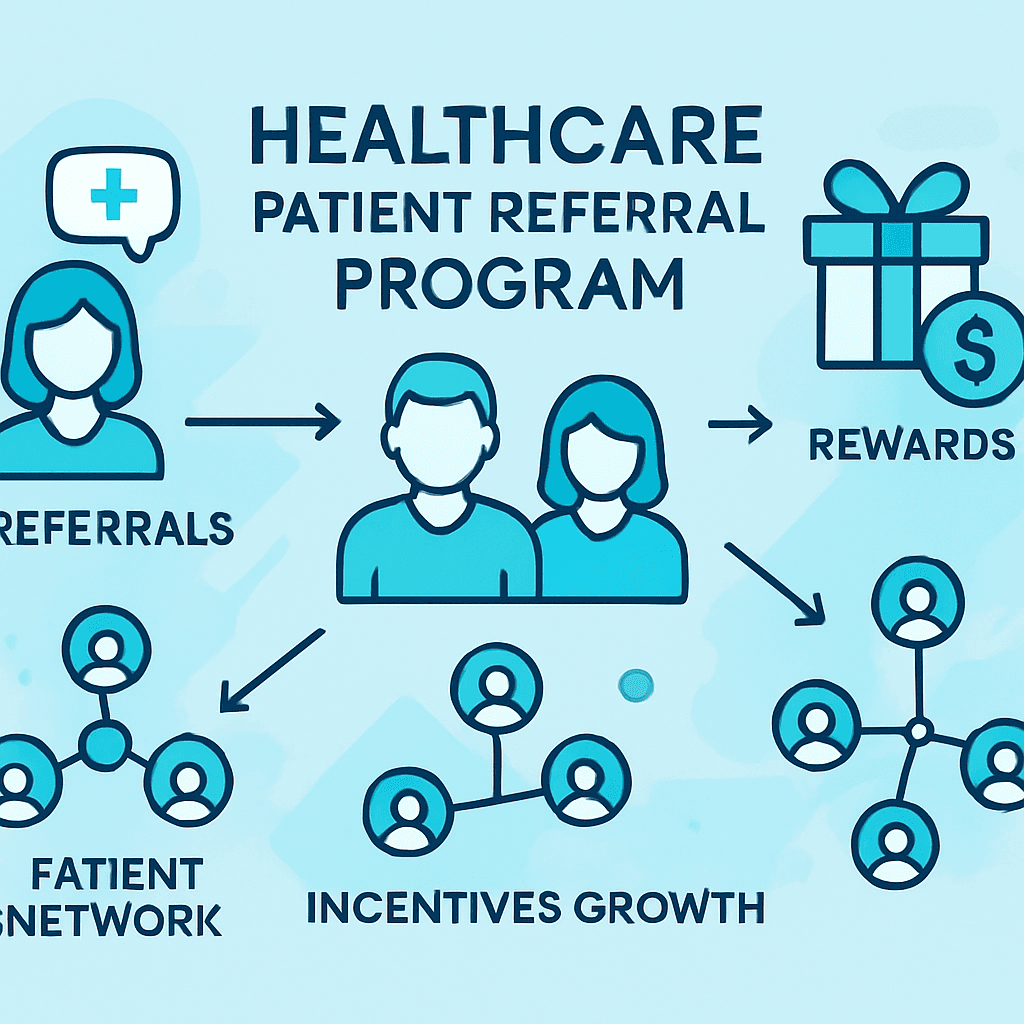
TL;DR – Quick Summary
- Referred patients have 37% higher retention and higher lifetime value
- Referral programs cost 80% less per acquisition than ads or SEO
- Most clinics lose 60% of referrals because they have no system to track and incentivize
- $50–$100 clinic credit per referral is the sweet spot for incentive
Why Patient Referrals are Your Best Growth Channel
Your happiest patients are your best marketers. Referred patients come pre-sold, have higher trust, book faster, and stay longer. Yet most clinics don't have a systematic referral program.
Why Referrals Win:
- ✓ 37% higher retention — referred patients are more committed to staying
- ✓ 80% cheaper acquisition — referrals cost far less than ads or SEO
- ✓ Higher LTV — referred patients book more services and stay longer
- ✓ Faster conversion — they arrive already trusting you
- ✓ Repeatable growth — as you serve more patients, referrals compound
The problem: Most clinics have no system to ask for, track, or reward referrals. They leave money on the table.
Building Your Referral Program
Step 1: Define Your Incentive
What will you offer for each successful referral? Most clinics use clinic credit:
- • $25–$50 — small discount, entry-level reward
- • $50–$75 — mid-range, covers one follow-up visit
- • $75–$100 — premium, covers half a premium service
Pro Tip:
Clinic credit is safer than cash. It keeps patients engaged and encourages return visits.
Step 2: Set Up Tracking
You need to track referrals accurately. Use one of these methods:
- • Referral code: Give each patient a unique code (e.g., "PATIENT123"). New patients enter code at booking.
- • Booking form: Add "How did you hear about us?" with "Patient referral" option + referrer name field
- • CRM integration: Automation that flags referral sources and triggers reward fulfillment
Step 3: Make It Easy to Share
Patients won't refer if they have to memorize a code. Make sharing frictionless:
- • Email referral link: One-click button that opens email pre-filled with referral message
- • WhatsApp share: Pre-written message patients can send via WhatsApp
- • Printed cards: Hand out referral cards at checkout with unique code
- • Website widget: "Refer a friend" section on your site
Messaging Your Referral Program
How you ask for referrals matters. Here are examples:
In-Clinic Script:
"We love having you as a patient! If you know anyone who could benefit from our care, we'd appreciate a referral. They get $[amount] off their first visit, and you get $[amount] in clinic credit. Here's your referral code: [code]. Feel free to text or email it to anyone you think we can help."
Email Follow-Up:
"Thank you for being a valued patient, [Name]! If you know someone who needs [service], we'd be grateful for a referral. Both of you get $[amount] as a thank you. Share your unique link: [link]"
Social Media Post:
"Know someone who needs expert [specialty] care? Refer them to us and earn $[amount] in clinic credit! They save $[amount] on their first visit. Win-win. Ask your referral code today!"
Legal & Compliance Considerations
Referral programs are legal, but you must follow regulations:
1. Transparency
Clearly disclose the referral program terms. Patients should know what the reward is and how they qualify.
2. No Kickbacks for Referrals (Stark Law)
You cannot pay physicians or healthcare providers for referrals. Paying patients is generally okay, but check your state's regulations.
3. Documentation
Track all referrals and rewards. Keep records for accounting and compliance audits.
4. Avoid False Claims
Don't claim the referral is a "guaranteed" reward or use deceptive marketing. Be honest about terms.
Referral Program Launch Timeline
Week 1: Design & Setup
Define incentive, create tracking system, write messaging, get legal approval
Week 2: Internal Training
Train staff on how to present the program, track referrals, and fulfill rewards
Week 3: Soft Launch
Start with existing patients. Ask for referrals at checkout. Measure response rate.
Week 4+: Scale
Add to website, email campaigns, social media. Optimize based on early data.
Frequently Asked Questions
How many referrals should I expect?
Expect 1 referral per 5–10 active patients in the first month. With optimization, this can increase to 1 per 3 patients over time. If you have 100 active patients, you could get 10–30 referrals per month.
What if a referred patient doesn't show up?
Only award the referrer after the referred patient completes their first appointment (or first payment). This prevents reward abuse.
Should I track referral ROI?
Absolutely. Calculate: (Revenue from referred patients) - (Referral rewards paid) = Net profit from referrals. Compare to other channels. You'll likely find referrals are your highest-ROI channel.
Can I combine referral rewards with other promotions?
Yes. Example: "Get $50 off your first visit when referred, plus another $50 if you book your second visit within 30 days." Stack incentives strategically.
Conclusion: Leverage Your Happiest Patients
Your best patients are sitting right in front of you. A simple referral program can turn them into your most effective growth engine. Referred patients convert faster, stay longer, and cost 80% less to acquire than ad-sourced patients.
Launch a basic program this month. Track results. Optimize. Within 6 months, you could have referrals accounting for 20–30% of new patient bookings.
Ready to Unlock Patient Referral Growth?
Let's design a referral program that turns your patients into your best acquisition channel.
Build Your Referral Program